Neurodiversity Awareness | Telekom Careers Blog
The shift in perspective that transforms leadership
Why do some colleagues behave differently than we expect - and what does that actually mean? Jules’s story shows that what may seem like unusual behavior is often not a sign of disinterest, but rather a different way of thinking, perceiving, and working. Neurodiversity challenges us to question our usual standards of professionalism - while at the same time opening up new perspectives on collaboration and leadership. Deutsche Telekom’s Neurodiversity Awareness Guide addresses this very issue: It helps us gain a new understanding of behavior rather than jumping to conclusions about it.
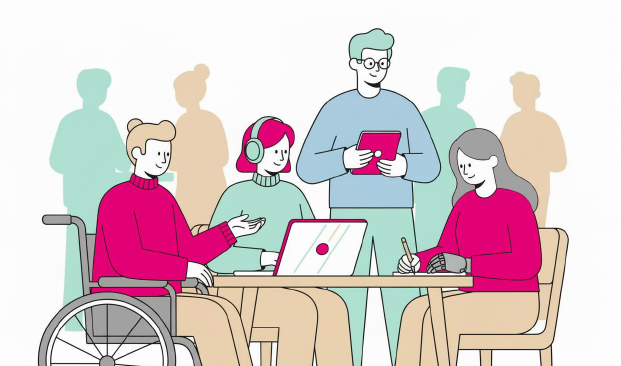
Every mind works differently © Deutsche Telekom Group
Jules is highly capable: Her creative solutions consistently hit the mark, and with her strategic foresight, she helps the team make progress with every challenge. But in day-to-day work, there are also those moments that make others wonder. Why does she usually retreat in the evenings instead of wrapping up the day with the team? And why does she sometimes seem distracted in meetings and fidget with her pen or other objects?
Jules behaves differently than you might expect. But that might not be intentional. It could simply be a matter of neurodiversity.
This story about Jules serves as the introduction to Deutsche Telekom’s Neurodiversity Awareness Guide
Why we developed a neurodiversity awareness guide
Professionalism is often measured against neurotypical ideals, such as engaging in small talk, maintaining eye contact, or responding spontaneously in social situations. Those who deviate from these standards are often miscategorized.
Deutsche Telekom’s Neurodiversity Community aims to challenge these norms: its approximately 950 members developed the guide for managers as a community project, guided by the principle: “We know best what it’s like to work here as a neurodivergent person. Let’s shape the perspective and how we approach this.”
What leaders can take away from this
Good leadership isn't about treating everyone the same. It's about taking differences into account. That sounds obvious - but it’s surprisingly difficult in everyday life. We’re used to evaluating behavior: committed or uncommitted, a team player or difficult, attentive or unfocused.
Neurodiversity encourages us to take a step back:
What does this behavior actually mean?
One example discussed in the guide is the concept of “masking.” Many neurodivergent people constantly adjust their behavior to meet expectations. They observe, analyze, and imitate - often for years - with the goal of appearing “normal” to others. But on the inside, it takes an enormous amount of energy. When this energy is spent on adaptation rather than on performance, everyone loses in the end.
What has changed as a result
Feedback from both employees and managers was overwhelmingly positive:
Employees like Jules felt seen for the first time: “I feel so much more included now!” – Member of the Neurodiversity Community
Managers felt more confident in working with their neurodiverse team: “For a colleague in our department, we were able to achieve a lot through small adjustments to his daily work routine - the impact is noticeable not only for him, but for the entire team.” – Manager at Deutsche Telekom Technik GmbH
This marks an important first step toward greater inclusion: People are talking about the issue, and they’re open-minded and well-informed. The next time a “Jules” moment happens - when someone doesn’t react the way we expect - hopefully more people will pause and ask a different question:
Not: What’s wrong here?
But instead: What don’t I understand yet?

Sarah Lauer
Sarah is the founder of Deutsche Telekom's Neurodiversity Community and is passionate about fostering inclusive workplaces where everyone can thrive. As a Solution Designer, she combines her enthusiasm for technology with her commitment to accessibility, inclusion, and neurodiversity.
→ all blog articles by Sarah Lauer